Diploma in Interior Design Course in Bangalore
Kickstart your creative career with practical training, industry-standard software, live projects, portfolio development and expert mentorship. Discover why Bangalore is one of India's leading destinations for aspiring interior designers.
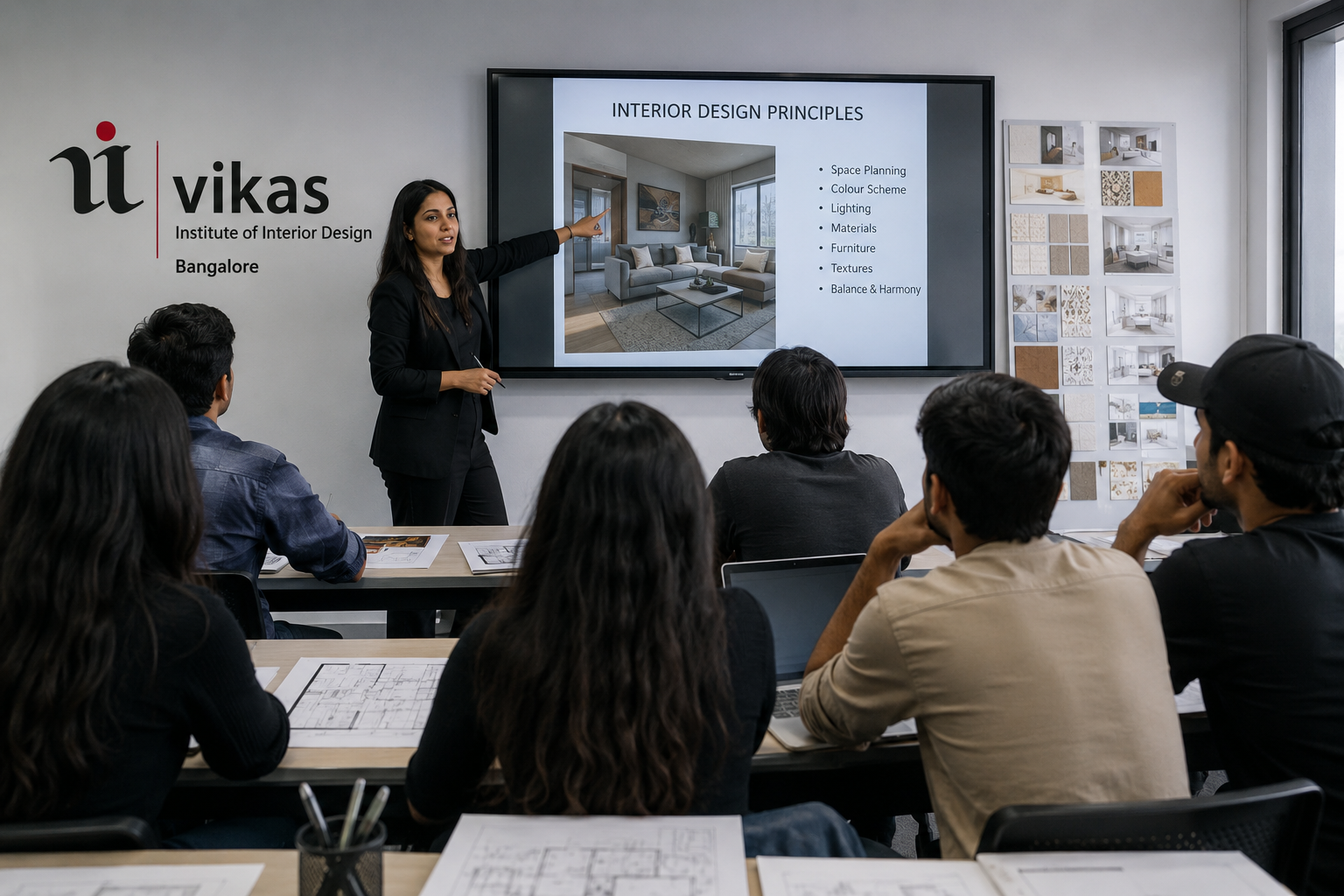
What is a Diploma in Interior Design?
A Diploma in Interior Design is a practical, industry-focused programme that prepares students to create functional, beautiful and technically sound interior spaces. Instead of focusing only on theory, it develops real-world design skills through software training, project work, space planning, furniture design, material selection and presentation techniques.
Creative Thinking
Understand colour theory, design principles, furniture planning, mood boards and interior styling to transform ideas into attractive living and commercial spaces.
Technical Skills
Learn industry tools like AutoCAD, SketchUp and 3D visualisation while understanding measurements, layouts, lighting, materials and working drawings.
Career Ready
Create a professional portfolio, improve client communication, gain practical exposure and prepare for careers in residential, commercial or freelance interior design.
Compared to short-term design courses, a diploma offers a structured learning path with practical assignments, software training, portfolio development and industry exposure, helping students build confidence before entering the job market or starting their own design practice.
Why Choose a Diploma in Interior Design in Bangalore?
Discover why this creative career is growing rapidly and how this course prepares you with practical skills, software knowledge, and industry exposure.
Why is it Becoming Popular?
Interior design is one of the fastest-growing creative professions with opportunities across residential and commercial sectors.
- Growing real estate industry
- Demand for smart homes
- Freelancing opportunities
- AutoCAD & SketchUp skills
Why Bangalore?
Bangalore provides one of India's best environments for aspiring interior designers.
- Leading architecture firms
- Internship opportunities
- Luxury residential projects
- Excellent career growth
Who Should Join?
This diploma is ideal for learners from different educational and professional backgrounds.
- Students after 10th & 12th
- Graduates
- Working professionals
- Career changers
What You'll Learn
Develop practical industry-ready skills through software training and live projects.
- AutoCAD
- SketchUp
- Portfolio Development
- Live Projects
Ready to Build Your Design Career?
Explore the complete Diploma in Interior Design Course in Bangalore and learn how practical training, live projects and portfolio development can help you become an industry-ready interior designer.
Explore Complete Guide →Quick Overview
Get a quick snapshot of the Diploma in Interior Design Course in Bangalore.
Why Choose a Diploma Instead of Learning Online?
While online learning is flexible, a structured diploma provides guided training, hands-on practice, mentorship, and real industry exposure that builds stronger career readiness.
Practical Learning
Work on structured assignments, software practice, and real-world projects instead of only passive video learning.
Faculty Guidance
Learn directly from experienced trainers who correct your work and help you build industry-ready skills.
Studio Environment
Experience a professional learning setup with critiques, teamwork, and structured design thinking sessions.
Portfolio Development
Build a strong portfolio with real projects that improve job opportunities and client trust.
Industry Exposure
Gain exposure through workshops, projects, and real-time industry interaction depending on institute facilities.
Placement Support
Get assistance with resumes, interviews, and job opportunities to start your career confidently.
Why Study Interior Design in Bangalore?
Bangalore offers a dynamic environment for aspiring interior designers with opportunities to learn, collaborate and grow alongside a wide range of industries that regularly invest in interior spaces.
Growing Construction Industry
Continuous residential and commercial development creates demand for design professionals involved in planning and interior execution.
IT Companies
Technology firms regularly design and renovate workplaces, creating opportunities for workspace planning and office interiors.
Residential Projects
Apartments, independent homes and gated communities contribute to ongoing demand for interior design services.
Luxury Villas
Premium residential developments often require customized interiors, furniture planning and high-end finishes.
Commercial Offices
Businesses invest in functional office layouts, collaborative spaces and modern workplace design.
Hospitality Projects
Hotels, restaurants, cafés and serviced apartments seek designers to enhance guest experiences and brand identity.
Retail Spaces
Showrooms and retail stores use interior design to improve customer experience and product presentation.
Furniture Industry
Furniture manufacturers and modular interior companies value designers who understand materials, layouts and user needs.
Why Bangalore Has More Career Opportunities Than Many Other Cities
Every city offers opportunities for interior designers, but Bangalore's technology, real estate and commercial growth create a broad mix of project types.
General Strengths
Technology, startups, residential growth, commercial expansion
Interior Design Opportunities
Office interiors, apartments, villas, retail, hospitality, coworking spaces, furniture and renovation projects
General Strengths
Manufacturing, healthcare, residential development
Interior Design Opportunities
Residential, office and institutional interior projects
General Strengths
IT growth, business parks, premium housing
Interior Design Opportunities
Corporate offices, luxury residences and mixed-use developments
General Strengths
Education hub, IT sector, growing housing market
Interior Design Opportunities
Apartments, offices, cafés and commercial interiors
General Strengths
Government institutions, luxury residences, retail
Interior Design Opportunities
High-end residential, hospitality, retail and office interiors
General Strengths
Financial centre, luxury real estate, hospitality
Interior Design Opportunities
Premium residential, commercial and hospitality projects with strong competition
Who Can Join This Diploma Course?
This diploma welcomes learners from different educational and professional backgrounds. Whether you're starting fresh or upgrading your skills, the course is designed for aspiring designers, professionals, and creative individuals alike.
After 10th
Build a strong foundation in interior design and begin your creative career with practical learning and industry-focused skills.
After PUC / 12th
One of the most popular pathways for students looking to pursue a professional career in interior design.
After Diploma
Enhance your existing technical knowledge while building a stronger portfolio and expanding career opportunities.
After Degree
Complement your academic qualifications with practical interior design, planning and visualization skills.
Working Professionals
Upskill or transition into a creative profession without losing the value of your previous work experience.
Housewives
Restart your career with professional design skills and explore freelance or entrepreneurial opportunities.
Career Switchers
Move confidently into the interior design industry through structured training, live projects and portfolio development.
Civil Engineers & Architects
Strengthen your construction expertise with interior planning, space design and visualization techniques.
Freelancers & Furniture Designers
Expand your services by integrating interior layouts, furniture planning and client presentation skills.
Eligibility for a Diploma in Interior Design
Eligibility requirements vary by institution. The points below reflect common admission criteria followed by many diploma programmes.
Minimum Qualification
Many institutes accept students after completing the 10th standard, while others may require 12th or an equivalent qualification.
Age
Most diploma programmes do not have a strict upper age limit, making them suitable for students as well as working professionals.
Marks
Required academic scores vary by institute. Always review the latest admission guidelines before applying.
English Knowledge
Basic reading and communication skills in English are useful for understanding design terminology and software.
Drawing Skills
Prior drawing experience is helpful but generally not mandatory, as most institutes teach the fundamentals during the course.
Computer Knowledge
Basic computer skills make it easier to learn software such as AutoCAD, SketchUp and other visualization tools.
Portfolio Requirement
Most diploma programmes do not require a portfolio for admission, although some institutes may request one for advanced entry.
Admission Guidance
Review the institute's admission process, documents and eligibility requirements before submitting your application.
Admission Tip
Always confirm the latest eligibility requirements directly with the institute you plan to join, as admission policies, qualification criteria and documentation requirements may change over time.
Admission Process
While the exact process differs by institute, the following steps are commonly followed for diploma admissions.
Inquiry
Contact the institute to learn about the course, eligibility and upcoming batches.
Counselling
Discuss your goals, background and suitable learning options with an academic counsellor.
Demo
Attend a demo session, if available, to understand the teaching approach and facilities.
Application
Complete the admission form and submit any required documents.
Fee Payment
Pay the applicable course fee according to the institute's payment process.
Batch Allocation
Receive confirmation of your batch schedule based on availability.
Orientation
Attend the introductory session to meet faculty and understand the course structure.
Ready to Start Your Interior Design Career?
Join one of Bangalore's leading Interior Design institutes and learn through live projects, industry software, portfolio development, expert faculty guidance, and placement assistance.
Choose the Interior Design Program That Matches Your Goals
Every learner has different career aspirations. Whether you're passionate about home décor, looking for a diploma program close to your location, or planning to build professional interior design skills, explore our specialised learning options designed to help you grow with confidence.
Home Decor Interior Design Course
Develop your creativity by learning colour schemes, furniture styling, space aesthetics, décor concepts, lighting ideas, and residential interior styling. This course is ideal for learners who enjoy transforming homes into beautiful and functional spaces.
Explore Home Decor Course →Diploma In Interior Designing Near BTM Layout
Looking for an interior design diploma close to BTM Layout? Discover industry-focused training, practical studio sessions, software learning, portfolio development, and career guidance at a conveniently accessible location.
View BTM Layout Program →Diploma In Interior Designing Near JP Nagar
Students from JP Nagar and nearby areas can explore a practical diploma program featuring live projects, AutoCAD, SketchUp, portfolio creation, and placement assistance to prepare for successful careers in interior design.
Explore JP Nagar Program →Continue Your Interior Design Education with Specialized Diploma Programs
After exploring our Diploma in Interior Design Course, you can further strengthen your knowledge by choosing a specialised diploma pathway. Whether you want an intensive one-year program, a master diploma with architectural concepts, or a comprehensive interior and architectural design course, these programs provide practical training, software skills, live projects, portfolio development, and industry-focused learning to prepare you for professional success.
1 Year Diploma in Interior Designing
Build a strong foundation in residential and commercial interior design through a structured one-year diploma. Learn AutoCAD, SketchUp, space planning, materials, furniture layouts, lighting design, presentation techniques, and portfolio creation while gaining practical experience through real-world projects.
Explore the 1 Year Diploma →Master Diploma in Interior and Architecture Design
Take your career to the next level with an advanced diploma that combines interior design principles with architectural planning. Gain deeper knowledge of construction concepts, advanced software, building drawings, project execution, and professional design workflows used in today's industry.
Explore the Master Diploma →Diploma in Interior and Architectural Design
Develop expertise in both interior and architectural design by learning space planning, drafting, visualization, structural basics, furniture planning, CAD software, and complete project documentation. This integrated diploma is ideal for students seeking broader career opportunities.
Explore the Integrated Diploma →Course Duration
Interior design diploma programmes are available in different durations to suit beginners, students, working professionals and fast learners. Choose the option that matches your career goals, learning pace and schedule.
6 Months
Ideal for focused skill development covering design basics, CAD software and portfolio fundamentals.
1 Year
A balanced programme with design theory, software, practical assignments and portfolio building.
2 Years
Comprehensive training with advanced design concepts, live projects and deeper technical knowledge.
Weekend
Designed for working professionals and college students who prefer weekend learning.
Fast-track
Accelerated learning for motivated students wanting to complete training in a shorter period.
Regular
Structured weekday classes offering consistent practice, mentoring and project work.
Detailed Course Curriculum
Build industry-ready interior design skills through a structured curriculum that combines creativity, technical knowledge, software understanding and practical project execution.
Module 1 – Foundation
- Introduction
- Design Principles
- Space Planning
- Furniture Planning
Module 2 – Interior Design
- Residential Design
- Commercial Interiors
- Kitchen Design
- Wardrobe Design
Module 3 – Technical Design
- Lighting Design
- Ceiling
- Flooring
- False Ceiling
Module 4 – Services
- Electrical Layouts
- Plumbing Basics
- Building Materials
- Interior Styling
Module 5 – Advanced Learning
- Landscape Basics
- Sustainable Interiors
- Working Drawings
- BOQ Preparation
Module 6 – Professional Practice
- Site Execution
- Vendor Coordination
- Client Handling
- Presentation Skills
- Portfolio Development
- Final Project
Software Training
Master industry-standard software used by professional interior designers to create drawings, 3D models, visualizations, presentations and AI-assisted workflows.
AutoCAD
- Purpose: 2D drafting
- Industry Use: Working drawings
- Projects: Floor plans
- Difficulty: Beginner
- Career Value: Essential
SketchUp
- Purpose: 3D modeling
- Industry Use: Concept design
- Projects: 3D interiors
- Difficulty: Beginner
- Career Value: High
3ds Max
- Purpose: Advanced modeling
- Industry Use: Visualization
- Projects: Photoreal scenes
- Difficulty: Advanced
- Career Value: High
V-Ray
- Purpose: Rendering
- Industry Use: Photoreal renders
- Projects: Render projects
- Difficulty: Intermediate
- Career Value: High
Lumion
- Purpose: Real-time renders
- Industry Use: Walkthroughs
- Projects: Animations
- Difficulty: Intermediate
- Career Value: High
Photoshop
- Purpose: Image editing
- Industry Use: Presentation
- Projects: Boards
- Difficulty: Beginner
- Career Value: High
Illustrator
- Purpose: Graphics
- Industry Use: Branding
- Projects: Layouts
- Difficulty: Intermediate
- Career Value: Medium
Revit
- Purpose: BIM
- Industry Use: Construction docs
- Projects: BIM projects
- Difficulty: Advanced
- Career Value: Very High
Enscape
- Purpose: Realtime rendering
- Industry Use: VR presentations
- Projects: Live renders
- Difficulty: Beginner
- Career Value: High
Canva
- Purpose: Presentations
- Industry Use: Marketing
- Projects: Portfolios
- Difficulty: Beginner
- Career Value: Medium
AI Tools
- Purpose: AI-assisted design
- Industry Use: Concept generation
- Projects: Mood boards & planning
- Difficulty: Beginner
- Career Value: Future Ready
Practical Training
Practical exposure helps students transform classroom knowledge into real-world interior design skills through guided activities, industry interaction and portfolio development.
Live Projects
Work on real residential and commercial interior projects to gain practical experience.
Studio Work
Develop concepts, layouts and presentations in a collaborative studio environment.
Lab Sessions
Practice design software through guided hands-on exercises.
Material Visits
Explore finishes, laminates, tiles, lighting and other interior materials.
Site Visits
Observe ongoing construction and interior execution at project sites.
Vendor Interaction
Learn how suppliers, contractors and manufacturers support project delivery.
Furniture Factory Visits
Understand furniture manufacturing, modular production and quality processes.
Model Making
Create physical scale models to improve spatial understanding and presentation skills.
Portfolio Building
Compile academic and live projects into a professional portfolio.
Student Projects
Throughout the course, students complete a wide variety of residential and commercial design projects to build creativity, technical knowledge and a professional portfolio.
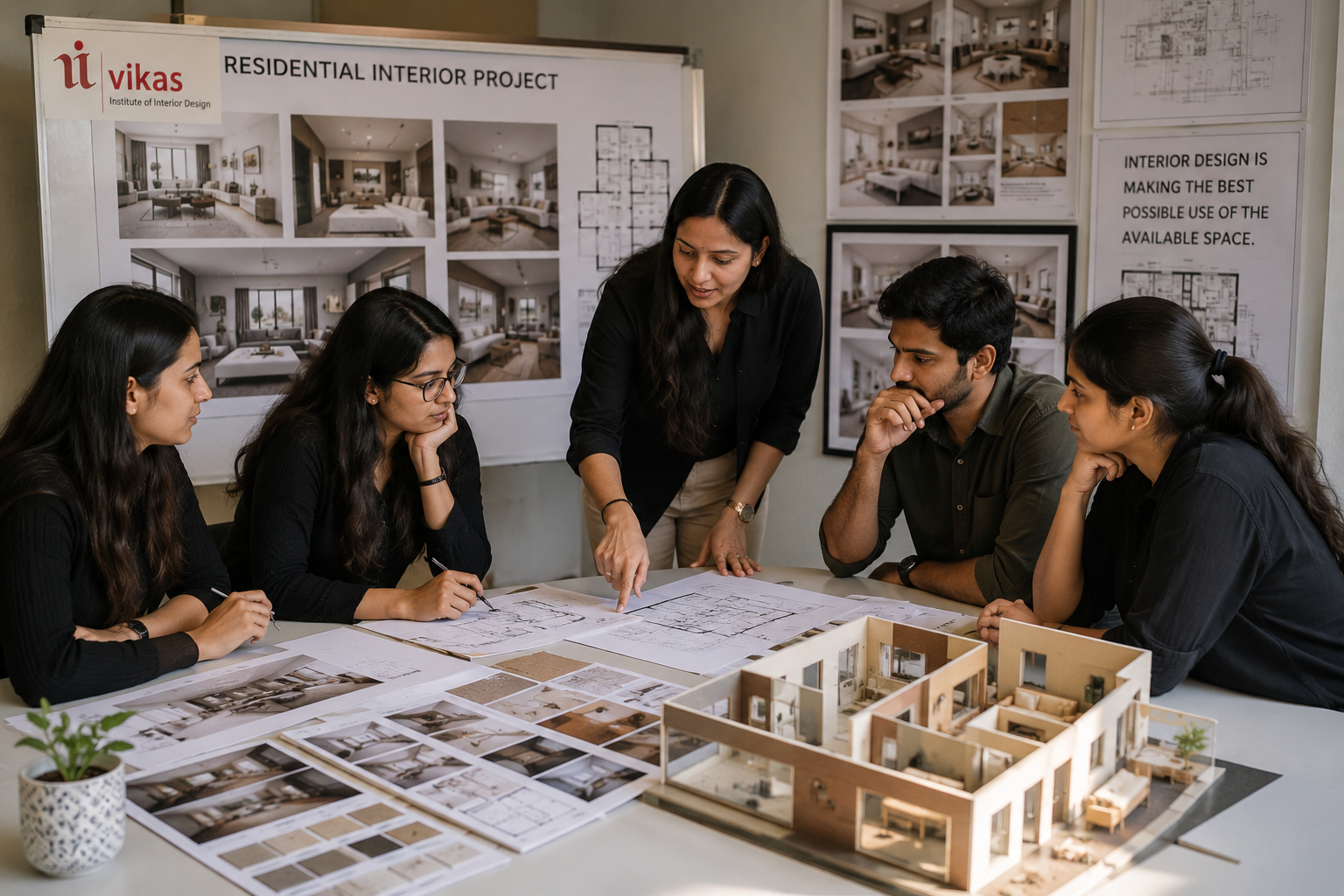
Residential
Students develop practical design concepts, layouts, material selections, lighting ideas and presentation boards for residential projects.
Apartment
Students develop practical design concepts, layouts, material selections, lighting ideas and presentation boards for apartment projects.
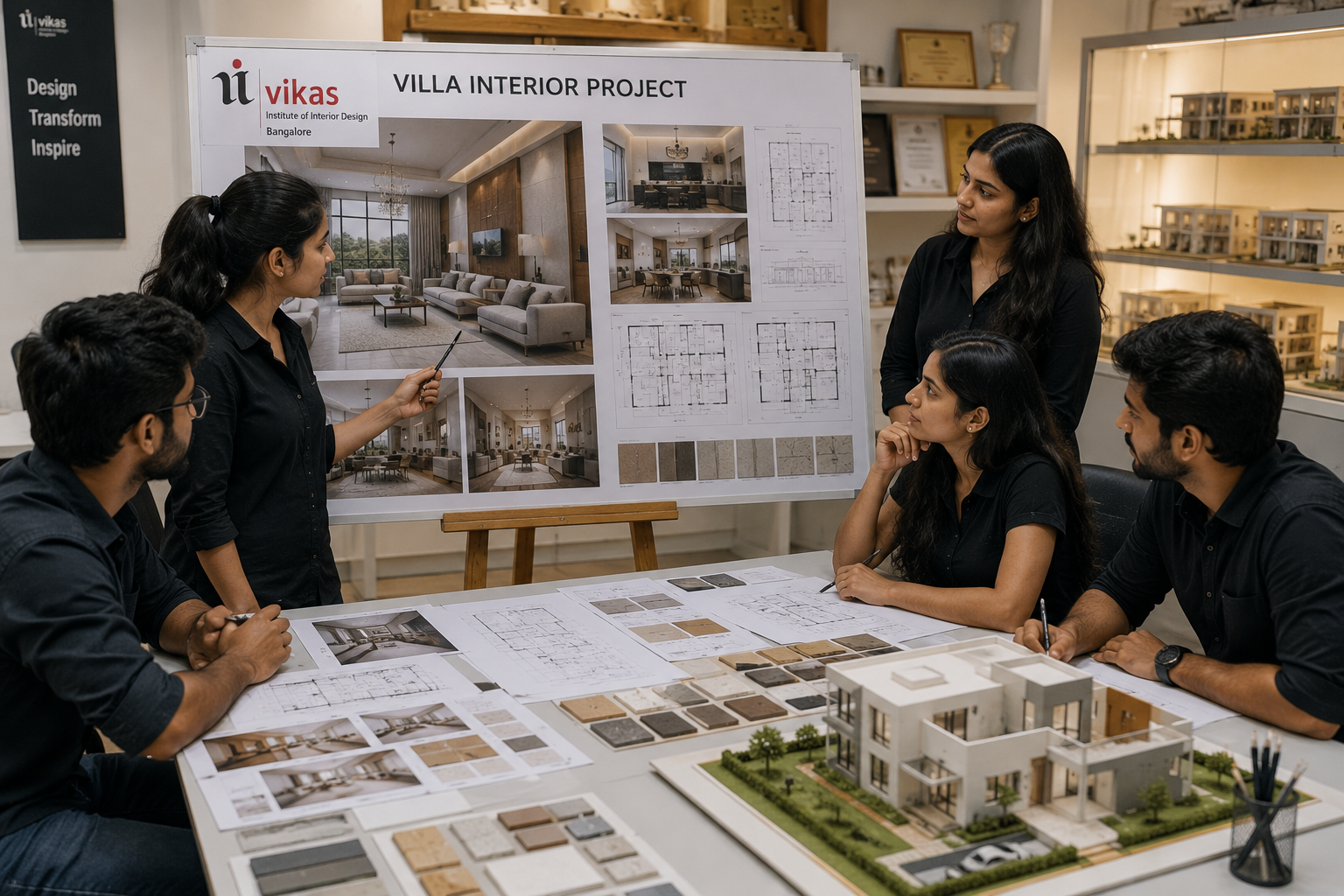
Villa
Students develop practical design concepts, layouts, material selections, lighting ideas and presentation boards for villa projects.
Office
Students develop practical design concepts, layouts, material selections, lighting ideas and presentation boards for office projects.
Restaurant
Students develop practical design concepts, layouts, material selections, lighting ideas and presentation boards for restaurant projects.
Cafe
Students develop practical design concepts, layouts, material selections, lighting ideas and presentation boards for cafe projects.
Clinic
Students develop practical design concepts, layouts, material selections, lighting ideas and presentation boards for clinic projects.
Showroom
Students develop practical design concepts, layouts, material selections, lighting ideas and presentation boards for showroom projects.
Hotel
Students develop practical design concepts, layouts, material selections, lighting ideas and presentation boards for hotel projects.
Retail
Students develop practical design concepts, layouts, material selections, lighting ideas and presentation boards for retail projects.
Salon
Students develop practical design concepts, layouts, material selections, lighting ideas and presentation boards for salon projects.
Kitchen
Students develop practical design concepts, layouts, material selections, lighting ideas and presentation boards for kitchen projects.
Bedroom
Students develop practical design concepts, layouts, material selections, lighting ideas and presentation boards for bedroom projects.
Living Room
Students develop practical design concepts, layouts, material selections, lighting ideas and presentation boards for living room projects.
Wardrobe
Students develop practical design concepts, layouts, material selections, lighting ideas and presentation boards for wardrobe projects.
 Residential
 Villa
Villa
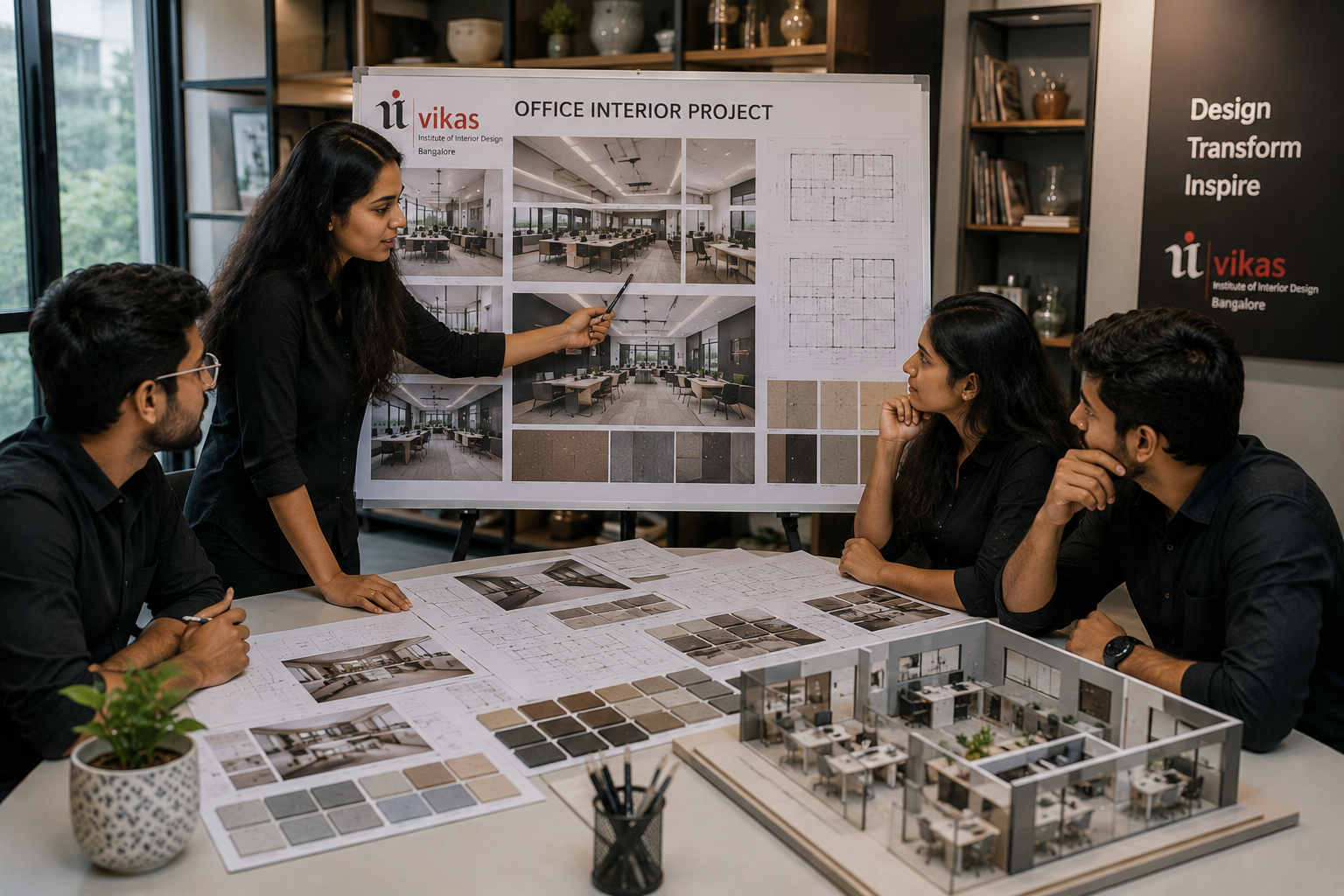 Office
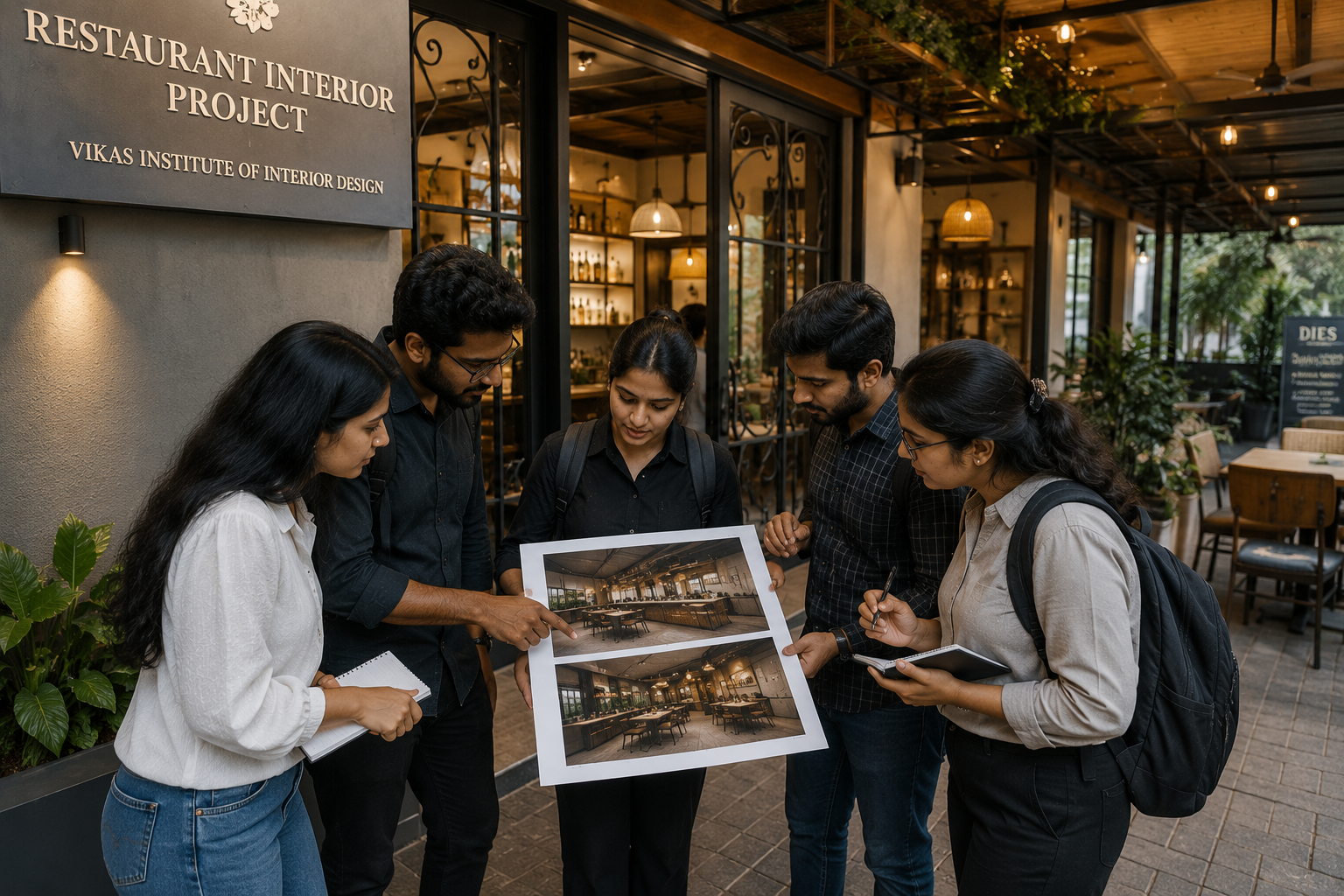 Restaurant
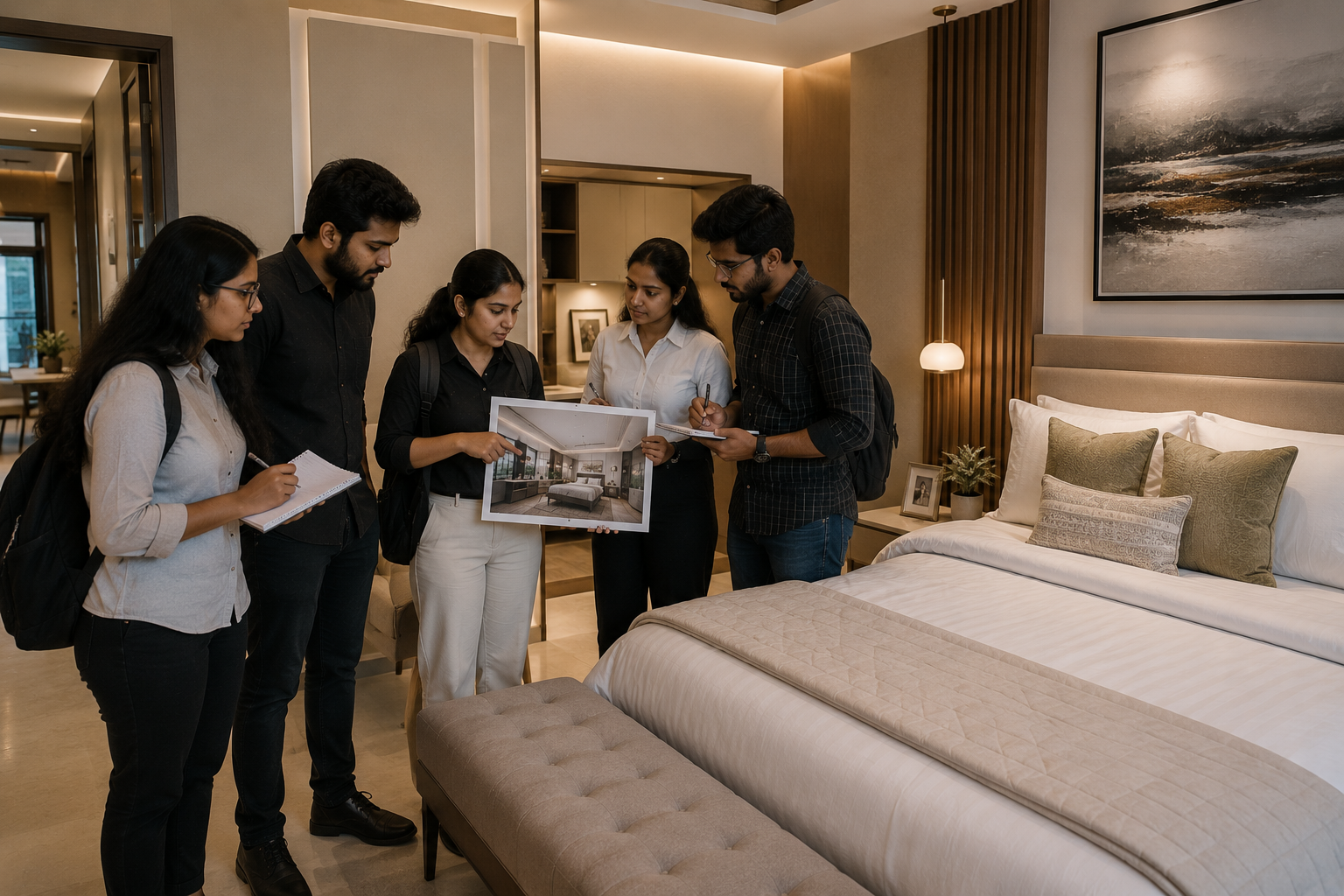 Bedroom
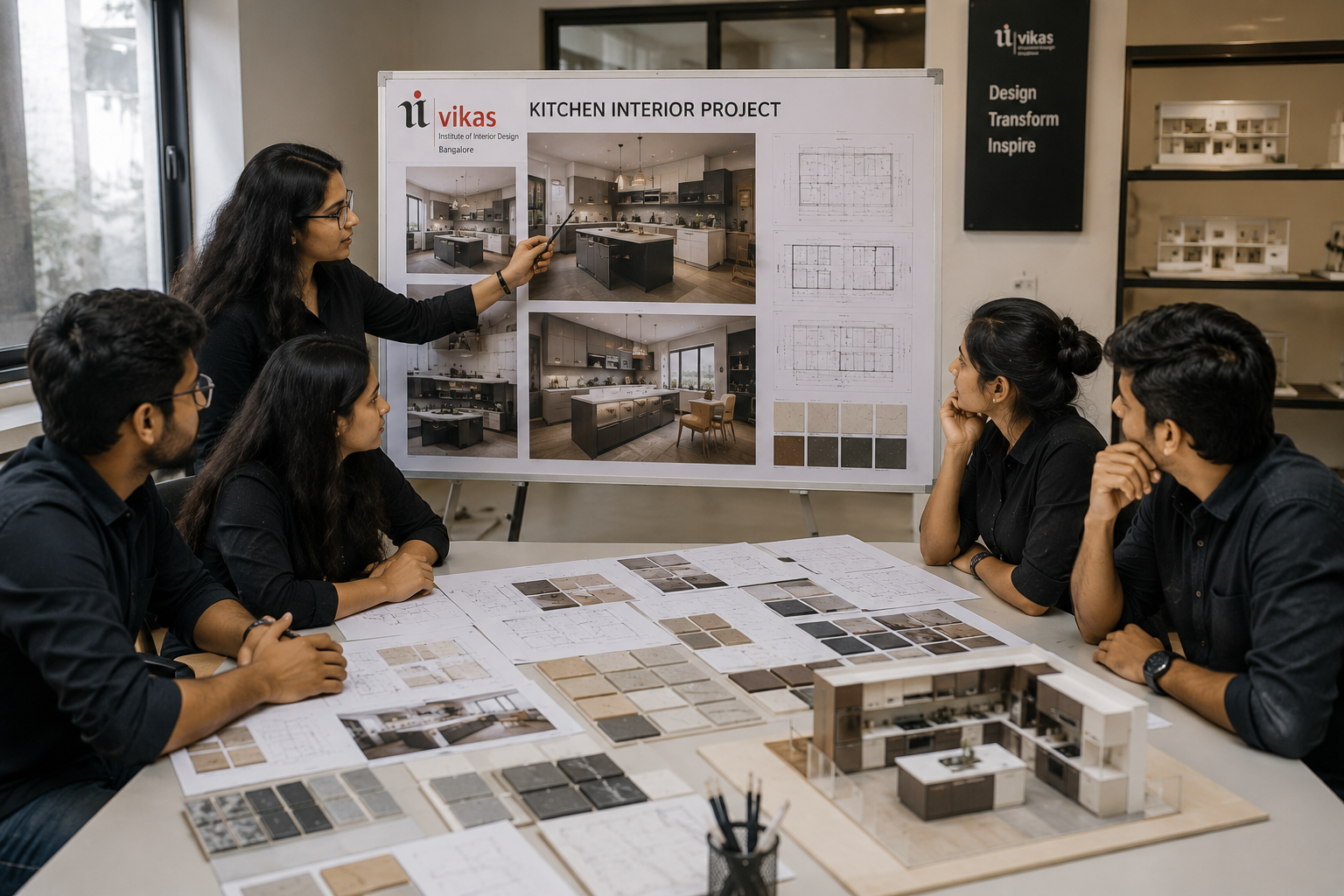 Kitchen
Ready to Start Your Interior Design Career?
Join one of Bangalore's leading Interior Design institutes and learn through live projects, industry software, portfolio development, expert faculty guidance, and placement assistance.
Skills You Will Develop
Beyond software and design concepts, this course helps you build technical, creative and professional skills required to succeed in the interior design industry.
Technical Skills
Learn measurements, layouts, construction details and working drawings.
Creative Thinking
Develop innovative concepts, color schemes and design solutions.
Communication
Improve interaction with clients, vendors and project teams.
Presentation
Create mood boards, renders and professional design presentations.
Client Handling
Understand client requirements and manage feedback effectively.
Budgeting
Estimate project costs and prepare basic BOQs.
Drawing Skills
Create hand sketches and technical drawings.
Software Skills
Use AutoCAD, SketchUp, Revit, Lumion and other design tools.
Material Selection
Choose finishes, furniture, lighting and décor materials.
Problem Solving
Resolve design and site challenges with practical solutions.
Time Management
Plan projects, meet deadlines and coordinate tasks efficiently.
Interior Design Process
Professional interior design follows a structured workflow from the first client discussion through planning, visualization, execution and final handover. Understanding each stage helps students manage projects efficiently.
Client Meeting
Discuss goals, style preferences, budget and project scope.
Requirement Gathering
Collect detailed functional and aesthetic requirements.
Site Measurement
Measure the site and document existing conditions.
Concept Design
Develop initial design ideas and planning concepts.
Mood Board
Prepare color palettes, materials and style references.
Layout Planning
Create furniture layouts and optimize space planning.
3D Visualization
Build realistic 3D models and renders for approval.
Material Selection
Choose finishes, furniture, lighting and décor materials.
Quotation
Prepare cost estimates and BOQ for the project.
Execution
Coordinate site work, vendors and quality checks.
Handover
Complete final inspection and deliver the finished project.
Career Opportunities After Interior Design
Interior design opens the door to a wide range of creative and technical career paths. Depending on your interests and skills, you can work in residential, commercial, retail, hospitality or start your own design business.
Interior Designer
Design functional and aesthetic residential and commercial interiors.
Residential Designer
Specialize in homes, apartments and villas.
Commercial Designer
Plan offices, retail stores and business spaces.
Kitchen Designer
Create ergonomic modular kitchen layouts.
Furniture Designer
Design custom and modular furniture solutions.
Retail Designer
Develop engaging showroom and retail environments.
Space Planner
Optimize layouts for efficient space utilization.
3D Visualizer
Produce realistic 3D models and renderings.
CAD Designer
Prepare technical drawings using AutoCAD and BIM tools.
Lighting Designer
Plan decorative and functional lighting schemes.
Site Supervisor
Monitor on-site execution and quality standards.
Project Coordinator
Coordinate clients, vendors and project schedules.
Freelancer
Offer independent interior design services.
Consultant
Provide expert design advice and planning solutions.
Entrepreneur
Start and grow your own interior design business.
Industries Hiring Interior Designers
Interior designers are in demand across many industries. The knowledge gained during an interior design course can open opportunities in residential, commercial and specialized sectors.
Construction
Interior designers collaborate on residential, commercial and mixed-use building projects.
Architecture
Work alongside architects to develop functional and aesthetic interior spaces.
Furniture
Design custom furniture, modular solutions and product layouts.
Hospitality
Create interiors for hotels, resorts, restaurants and cafés.
Healthcare
Design clinics, hospitals and wellness spaces with user comfort in mind.
Retail
Develop attractive retail stores, showrooms and shopping experiences.
IT
Design modern office spaces, coworking environments and tech campuses.
Real Estate
Support developers with model apartments, villas and commercial projects.
Exhibition
Plan exhibition booths, trade show displays and event interiors.
Luxury Interiors
Create premium residential and high-end commercial interiors.
Government
Contribute to public buildings, institutional projects and infrastructure interiors.
Interior Design Salary Guide
Career growth and earning potential depend on factors such as skills, portfolio quality, location, specialization, employer and business development. The table below outlines common career stages rather than fixed salary figures.
| Career Stage | Typical Focus | Growth Potential |
|---|---|---|
| Freshers | Entry-level opportunities after completing the course. | Build skills, portfolio and practical experience. |
| 1 Year Experience | Handle independent design tasks and client interactions. | Higher responsibilities and project ownership. |
| 3 Years Experience | Manage larger residential and commercial projects. | Leadership opportunities begin to grow. |
| 5 Years Experience | Lead teams, coordinate projects and mentor juniors. | Strong career growth with specialized expertise. |
| Freelancing | Income varies by project type, reputation and client base. | Flexible work with independent clients. |
| Own Business | Potential depends on business scale, marketing and project pipeline. | Opportunity to build a design brand. |
| International | Compensation varies by country, role and local market. | Global opportunities with relevant experience. |
Freelancing Opportunities in Interior Design
Freelancing allows interior designers to work independently, build a personal brand and collaborate with clients across residential and commercial projects. Success depends on strong design skills, professionalism and consistent client satisfaction.
Where to Find Clients
Build a presence through referrals, networking, social media, online marketplaces, architects, builders and local business connections.
Build a Strong Portfolio
Showcase residential and commercial projects, 3D renders, drawings and completed work to build trust with potential clients.
Pricing Your Services
Understand how to estimate project costs, charge by area or project, and create transparent quotations for clients.
Contracts & Agreements
Use written agreements that define project scope, timelines, payment terms, revisions and responsibilities.
Common Mistakes to Avoid
Avoid underpricing, unclear communication, missing documentation, unrealistic deadlines and scope creep.
Growing Your Freelance Business
Collect testimonials, deliver quality work, maintain client relationships and build a strong online brand for repeat business.
Business Opportunities After Interior Design
An interior design education can also be the foundation for building your own business. With technical expertise, creativity and practical experience, you can launch specialized design services or grow a full-scale design enterprise.
Interior Design Firm
Start your own studio offering residential and commercial interior design services.
Interior Consultancy
Provide expert planning, design reviews and project consulting for clients.
Furniture Business
Design, manufacture or sell custom and modular furniture solutions.
Modular Kitchen Business
Specialize in modular kitchen planning, manufacturing and installation.
Home Styling
Offer home décor, styling, staging and makeover services for homeowners.
3D Visualization Studio
Create photorealistic renders, walkthroughs and BIM visualization services.
Interior Design Training
Teach aspiring designers through classroom, online or workshop-based programs.
Tools Used by Interior Designers
Professional interior designers rely on a combination of measuring equipment, drawing tools, digital software and material references to transform ideas into functional, buildable and visually appealing spaces.
Laser Measure
Accurately measure rooms, walls and site dimensions for planning and execution.
Drawing Tools
Use scales, pencils, sketchbooks and drafting tools for concept development and technical drawings.
Laptop
Run design software, prepare presentations and manage project documentation.
Design Software
Create 2D drawings, 3D models, renderings and BIM workflows using professional applications.
Color Palette
Experiment with color combinations to achieve balanced and visually appealing interiors.
Material Samples
Compare finishes, laminates, fabrics, tiles and textures before final material selection.
Materials You Will Learn
Understanding interior materials is essential for designing functional, durable and visually appealing spaces. Students learn how to select the right materials based on performance, aesthetics, maintenance and project requirements.
Wood
Natural material widely used for furniture, doors and interior detailing.
Plywood
Strong engineered wood used for cabinets, wardrobes and modular furniture.
MDF
Smooth board ideal for painted furniture, paneling and decorative designs.
HDHMR
High-density moisture-resistant board for kitchens and wet areas.
Laminate
Decorative surface finish available in various colors, textures and patterns.
Acrylic
High-gloss finish used for premium modular kitchens and wardrobes.
Glass
Used for partitions, facades, railings and modern interior aesthetics.
Granite
Durable natural stone commonly used for countertops and flooring.
Quartz
Engineered stone preferred for stylish, low-maintenance countertops.
Tiles
Versatile flooring and wall finishes available in many designs.
Wallpaper
Decorative wall covering for adding texture and personality.
Fabric
Essential for upholstery, curtains, cushions and soft furnishings.
Paint
Creates color schemes and protective finishes for interior surfaces.
Lighting
Enhances functionality, ambience and visual appeal of spaces.
Hardware
Includes hinges, channels, handles and fittings for furniture.
Interior Design Trends
Stay updated with the latest trends shaping modern residential and commercial interiors.
Minimal
Clean lines, clutter-free layouts and functional spaces.
Japandi
Japanese simplicity blended with Scandinavian warmth.
Luxury
Premium materials, bespoke furniture and elegant finishes.
Smart Homes
Integrated automation, lighting and intelligent living.
Biophilic
Nature-inspired interiors with plants and natural light.
Sustainable
Eco-friendly materials and energy-conscious design.
AI
AI-assisted visualization, planning and personalization.
Modular
Flexible storage and modular furniture solutions.
Space-saving
Innovative layouts that maximize compact spaces.
Portfolio Development
A strong portfolio showcases your creativity, technical skills and project experience, helping you impress clients and employers.
Importance
A professional portfolio demonstrates your design process, creativity and technical expertise.
Best Projects
Include residential, commercial, kitchen, wardrobe and 3D visualization projects that highlight your strengths.
Presentation
Use consistent layouts, quality renders, clear drawings and concise project descriptions.
PDF Portfolio
Create a well-organized PDF that is easy to share with recruiters and clients.
Online Portfolio
Publish your work on a website or portfolio platform to build your professional presence.
Interview Portfolio
Prepare a focused selection of your strongest work to confidently explain your design decisions during interviews.
Placement Assistance
Career support services help students transition from training to employment by strengthening professional skills, improving confidence and connecting with industry opportunities.
Resume
Create a professional resume that highlights your interior design skills, software knowledge and project experience.
Mock Interview
Practice interviews with expert feedback to improve communication, confidence and job readiness.
Portfolio Review
Receive guidance to refine your portfolio, presentations and project documentation before applying for jobs.
Internships
Gain practical exposure through internship opportunities that help you understand real-world interior design workflows.
Industry Connections
Interact with design firms, recruiters and professionals to expand your network and explore career opportunities.
Internship Benefits
Internships bridge the gap between classroom learning and professional practice, allowing aspiring interior designers to build practical skills, confidence and industry exposure.
Learning
Apply classroom concepts to live interior design projects while understanding professional workflows.
Confidence
Build confidence by participating in meetings, site visits and practical design tasks.
Networking
Connect with architects, interior designers, vendors and industry professionals for future career opportunities.
Real Clients
Observe client interactions, understand project requirements and learn how design solutions are presented.
Execution
Gain hands-on experience with site coordination, material selection and project execution processes.
Soft Skills
Successful interior designers combine technical expertise with strong interpersonal skills to communicate ideas, manage projects and build lasting client relationships.
Communication
Clearly explain design concepts, collaborate with clients and coordinate effectively with teams and vendors.
Negotiation
Develop negotiation skills to discuss budgets, materials, timelines and project expectations professionally.
Leadership
Lead design projects with confidence by managing responsibilities, motivating teams and making informed decisions.
Presentation
Present mood boards, layouts and design proposals confidently using professional communication techniques.
Client Psychology
Understand client preferences, behaviour and expectations to create personalized interior design solutions.
Common Mistakes Beginners Make
Avoiding common design mistakes helps aspiring interior designers create functional, aesthetically pleasing and client-focused spaces from the beginning of their careers.
Ignoring Measurements
Incorrect dimensions can lead to furniture fitting issues, circulation problems and costly rework.
Poor Lighting
Relying on a single light source can reduce comfort, functionality and the overall ambience of a space.
Wrong Materials
Choosing unsuitable materials may affect durability, maintenance and long-term performance.
Budget Mismatch
Poor budget planning can lead to compromises, delays and incomplete project execution.
Bad Layouts
Inefficient space planning can make interiors uncomfortable and reduce usability.
Weak Portfolio
An incomplete or poorly presented portfolio may reduce opportunities with employers and clients.
Diploma vs Certificate
Understanding the differences between diploma and certificate programs helps students choose the course that best matches their career goals, duration and learning requirements.
| Feature | Diploma Course | Certificate Course |
|---|---|---|
| Duration | 6–12 Months | 1–6 Months |
| Curriculum | Comprehensive with practical training | Focused on specific skills |
| Software Training | Extensive | Basic to intermediate |
| Projects | Multiple live and portfolio projects | Limited practice projects |
| Career Opportunities | Broader roles and higher growth potential | Entry-level or skill enhancement |
| Best For | Students seeking a professional career | Working professionals or beginners seeking quick upskilling |
Diploma vs Degree
Choosing between a diploma and a degree depends on your career goals, study duration, practical training requirements and long-term professional aspirations in interior design.
| Feature | Diploma in Interior Design | Degree in Interior Design |
|---|---|---|
| Duration | 6–12 Months | 3–4 Years |
| Focus | Practical skills and job readiness | Comprehensive academic and professional education |
| Curriculum | Industry-oriented with software and live projects | In-depth theory, research, design studios and practical training |
| Career Start | Quicker entry into the workforce | Longer study period before full-time employment |
| Cost | Generally more affordable | Higher tuition and longer commitment |
| Best For | Students seeking faster career opportunities | Students aiming for extensive academic qualifications |
Diploma vs BSc Interior Design
Both programs can lead to careers in interior design, but they differ in duration, learning approach, academic depth and career pathways. Understanding these differences helps students choose the option that best suits their goals.
| Feature | Diploma in Interior Design | BSc Interior Design |
|---|---|---|
| Duration | 6–12 Months | 3 Years |
| Learning Focus | Practical training with industry-oriented skills | Academic education combined with design theory and practical work |
| Software Training | Extensive hands-on software practice | Included as part of the curriculum |
| Projects | Live projects and portfolio development | Studio projects, research assignments and internships |
| Career Entry | Faster entry into the industry | Longer academic route before full-time employment |
| Best For | Students seeking job-ready skills quickly | Students looking for a full undergraduate qualification |
Diploma vs B.Des
Both a Diploma and a Bachelor of Design (B.Des) can lead to rewarding careers in interior design. The right choice depends on your career goals, preferred learning style, budget and the time you wish to invest in your education.
| Feature | Diploma in Interior Design | B.Des in Interior Design |
|---|---|---|
| Duration | 6–12 Months | 4 Years |
| Learning Approach | Practical, industry-focused training | Comprehensive design education with theory, studios and research |
| Software Training | Extensive hands-on CAD & 3D software practice | Integrated throughout the academic curriculum |
| Portfolio Development | Live projects and career-oriented portfolio | Studio projects, thesis work and advanced design portfolio |
| Career Readiness | Faster entry into professional roles | Longer academic pathway with broader specialization options |
| Best For | Students seeking practical skills and quick employment | Students pursuing an in-depth professional design degree |
Diploma vs Architecture
Although both fields contribute to creating functional and beautiful spaces, a Diploma in Interior Design and Architecture differ in scope, education, project responsibilities and career pathways.
| Feature | Diploma in Interior Design | Architecture |
|---|---|---|
| Duration | 6–12 Months | 5 Years (B.Arch) |
| Primary Focus | Interior spaces, aesthetics and functionality | Building planning, structural design and construction |
| Design Scope | Furniture, lighting, materials, colours and space planning | Entire buildings including structure, planning and regulations |
| Software | AutoCAD, SketchUp, 3ds Max, V-Ray | AutoCAD, Revit, BIM, Rhino and architectural software |
| Career Opportunities | Interior Designer, Space Planner, Visualizer | Architect, Urban Planner, Project Architect |
| Best For | Students passionate about interior environments | Students interested in building design and construction |
Diploma vs Civil Engineering
Interior Design and Civil Engineering are both essential to the construction industry, but they focus on different aspects of creating spaces. This comparison helps students understand which career path aligns with their interests and goals.
| Feature | Diploma in Interior Design | Civil Engineering |
|---|---|---|
| Duration | 6–12 Months | 3–4 Years (Diploma/B.E./B.Tech) |
| Primary Focus | Interior aesthetics, space planning and functionality | Infrastructure, structural design and construction |
| Work Scope | Furniture, lighting, materials, décor and interiors | Buildings, roads, bridges, drainage and public infrastructure |
| Software | AutoCAD, SketchUp, 3ds Max, V-Ray | AutoCAD Civil, STAAD.Pro, ETABS, Revit |
| Career Opportunities | Interior Designer, Space Planner, 3D Visualizer | Civil Engineer, Site Engineer, Structural Engineer |
| Best For | Creative individuals passionate about interior spaces | Students interested in engineering, construction and infrastructure |
Advantages
Interior design education offers practical knowledge, creative growth and excellent career opportunities. These key advantages help students build a strong foundation for long-term success.
Career
Access diverse opportunities in residential, commercial and freelance interior design.
Cost
Diploma programs are typically more affordable than long-term degree courses.
Time
Learn industry-ready skills in a shorter duration and start your career sooner.
Practical
Hands-on projects, software training and site exposure improve real-world skills.
ROI
Strong placement potential and freelance opportunities provide an excellent return on investment.
Challenges
Every interior designer faces professional challenges that require planning, communication and adaptability. Understanding these challenges helps students prepare for successful careers.
Deadlines
Managing multiple projects within strict timelines requires excellent planning, organization and time management skills.
Client Expectations
Balancing creative ideas with client preferences, budgets and practical requirements is essential for successful projects.
Competition
Standing out in a competitive market demands continuous learning, innovation and a strong professional portfolio.
Site Work
Regular site visits, coordination with contractors and handling unexpected issues are important parts of project execution.
Is Interior Design a Good Career?
Interior design continues to be one of the fastest-growing creative professions as residential, commercial and hospitality projects increase. Skilled designers are in demand for designing functional, sustainable and visually appealing spaces.
Future Demand
Rapid urbanization, smart homes, luxury housing, office renovations and commercial developments are creating strong demand for qualified interior designers. Digital design tools and 3D visualization have also expanded opportunities in freelancing and remote design services.
Career Opportunities
Graduates can work as Interior Designers, Space Planners, 3D Visualizers, Furniture Designers, Project Coordinators or start their own design consultancy. Continuous learning and a strong portfolio can significantly improve career growth.
Future Scope
AI
AI-driven automation and analytics will reshape industries and create new business models.
VR
Immersive experiences will transform education, entertainment, training, and collaboration.
Luxury Housing
Demand for premium sustainable living and smart homes is expected to rise.
Commercial Growth
Modern business districts and mixed-use developments will continue expanding.
Global Opportunities
Cross-border collaboration and digital markets will broaden career and investment options.
Remote Work
Hybrid and remote-first models will remain a major driver of workplace flexibility.
Expected ROI
Course Investment
Develop practical, industry-ready skills through structured learning that supports long-term career growth.
Average Salary
Professionals with in-demand expertise often qualify for competitive salary packages across multiple industries.
Growth
Continuous upskilling opens opportunities for promotions, leadership roles, and specialized career paths.
Why Practical Training Matters More Than Theory
Learning concepts is important, but real career success comes from applying them in practical situations. Employers value professionals who can confidently solve real-world challenges, work with industry tools, and contribute from day one.
Build Real Skills
Hands-on projects help you understand workflows, tools, and techniques that are actually used in the workplace.
Gain Confidence
Practicing real scenarios prepares you to handle interviews, workplace tasks, and client requirements with confidence.
Improve Employability
Recruiters often prioritize candidates who can demonstrate practical experience over those with theoretical knowledge alone.
Create a Strong Portfolio
Working on practical assignments gives you projects that showcase your abilities and strengthen your professional profile.
How to Choose the Right Institute
Selecting the right training institute is one of the most important career decisions. Beyond course content, evaluate the quality of teaching, learning environment, practical exposure, and placement support to ensure you gain skills that are valued by employers.
Faculty
Choose an institute with experienced trainers who possess strong industry knowledge and can provide practical insights alongside theoretical concepts.
Infrastructure
A modern learning environment with well-equipped classrooms, labs, and reliable facilities enhances the overall training experience.
Software
Ensure students learn using the latest industry-standard software and tools that employers currently expect professionals to know.
Projects
Real-world projects help develop practical skills, problem-solving ability, and a portfolio that strengthens your job applications.
Placements
Review the institute's placement assistance, recruiter network, career guidance, and support offered throughout the hiring process.
Reviews
Read authentic student reviews and testimonials to understand teaching quality, learning experience, and career outcomes.
Industry Exposure
Institutes that provide workshops, guest lectures, internships, and interaction with industry professionals help students stay aligned with current market expectations.
Questions to Ask Before Taking Admission
Choosing the right institute becomes much easier when you ask the right questions before enrolling. Use this checklist to evaluate every training institute with confidence.
Is the course curriculum updated with current industry standards?
Do the trainers have real industry experience?
Will I get hands-on practical training?
Which software and tools will I learn?
What placement support is provided?
Can I see student reviews and success stories?
Are there any hidden fees or additional charges?
Can I visit the campus before enrolling?
Career Roadmap
A successful design career is built step by step. Focus on learning practical skills, gaining real-world experience, and continuously improving your expertise to unlock better career opportunities.
Student
Build a strong foundation by learning the fundamentals.
Diploma
Complete professional training with practical assignments.
Internship
Gain real industry exposure and hands-on experience.
Junior Designer
Start your career by working on live client projects.
Designer
Handle independent projects and strengthen your portfolio.
Senior Designer
Lead creative work while mentoring junior professionals.
Design Manager
Manage teams, projects, and strategic design initiatives.
Entrepreneur
Launch your own studio, agency, or successful freelance business.
Frequently Asked Questions
Find answers to the most common questions students ask before enrolling in a diploma course. These FAQs will help you make an informed decision about your education and career.