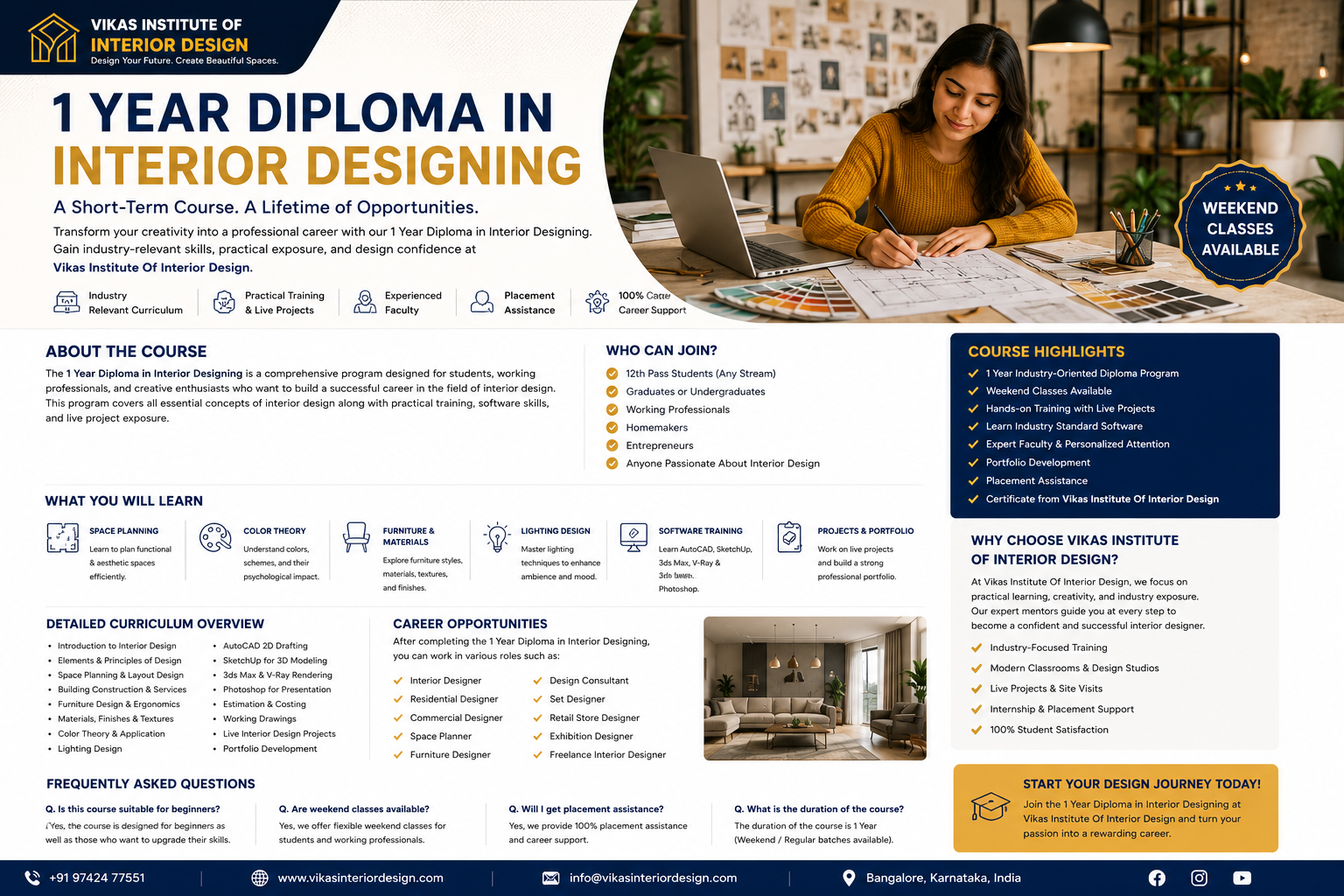
Exploring the Benefits and Opportunities of a 1-Year Diploma in Interior Designing

1-Year Diploma in Interior Designing

Introduction to Interior Designing

Interior designing is an essential discipline that blends creativity and functionality to enhance living and working spaces. This field not only involves the aesthetic arrangement of elements but also focuses on the practical aspects of how spaces are used. The art of interior designing plays a significant role in determining the comfort, efficiency, and overall atmosphere of an environment, making it a critical component in both residential and commercial settings.

Professionals in this arena, known as interior designers, are tasked with the responsibility of understanding client needs, spatial layouts, and effective design principles. They work to create environments that meet contemporary demands for beauty and usability, whether they are designing a cozy home, an innovative office, or a bustling retail space. Their expertise allows them to balance aesthetics and function, ensuring that the spaces not only look appealing but also serve their intended purposes efficiently.

To be successful, an interior designer must possess a wide range of skills, including creativity, design knowledge, and technical proficiency. Skills such as color theory, spatial awareness, and proficiency in design software are vital in bringing an interior vision to life. Furthermore, the ability to communicate effectively with clients and understand their preferences is paramount, as it ensures that the final design reflects the client’s desires while adhering to practical considerations.

Institutions such as the Vikas Institute of Interior Designing provide comprehensive training programs that equip aspiring interior designers with the skills necessary to thrive in this dynamic field. Through focused curricula, students explore design fundamentals, learn about materials and furnishings, and develop their portfolios, setting the stage for successful careers in interior design.

Overview of the 1-Year Diploma Program

The 1-year diploma in interior designing is designed to equip students with essential skills and knowledge required to excel in the dynamic field of interior design. Offered by various institutions, including the renowned Vikas Institute of Interior Designing, this program emphasizes practical application and industry relevance. It is structured to encourage creativity and innovation while instilling a comprehensive understanding of design principles.

The curriculum encompasses a variety of subjects that cover all aspects of interior designing. Courses typically include design fundamentals, color theory, material selection, space planning, and architectural drawing. These foundational subjects are essential for developing a robust understanding of how to create functional and aesthetically pleasing interior spaces. Hands-on projects are often integrated into the coursework, allowing students to create real-world design solutions that reflect their growing expertise.

In addition to technical skills, the program emphasizes critical thinking and problem-solving abilities that are vital in tackling complex design challenges. Students also learn about the business aspects of interior designing, including project management and client interaction. This holistic approach ensures that graduates are not only proficient in design but also well-prepared to navigate the professional landscape successfully.

By the end of the year, students will have developed a solid portfolio showcasing their design projects, which is essential for seeking employment or further educational opportunities. The Vikas Institute of Interior Designing, among others, positions its diploma program as a stepping stone for budding interior designers, providing them with the necessary tools to turn their creativity into a flourishing career.

Skills Developed During the Course

Enrolling in the 1-year diploma in interior designing at the vikas institute of interior designing enables students to acquire a diverse range of essential skills that are crucial for success in the field. One of the core competencies developed during this program is a solid understanding of design principles. Students learn the fundamental concepts of design, including balance, contrast, emphasis, and harmony, which are vital to creating visually appealing spaces.

Additionally, space planning is a significant skill honed during the course. This involves the ability to effectively utilize space, ensuring that every area serves its intended purpose while being aesthetically pleasing. Students are trained to assess the functionality of different layouts and how dimensions impact the flow of a space, which is critical for residential and commercial projects alike.

Another key area of learning is color theory. Understanding the psychological effects of colors, color wheels, and combinations helps students make informed decisions when selecting palettes that will convey the desired mood and style in interior environments. This knowledge is instrumental in both practical and creative aspects of interior design.

Moreover, proficiency in industry-standard software is emphasized throughout the program. Tools such as AutoCAD and SketchUp are integral for designing and visualizing concepts. Gaining skills in these applications is imperative for aspiring interior designers, as it enables them to draft detailed plans and 3D models that are essential for communicating design ideas to clients and contractors effectively.

Overall, the 1-year diploma program at the vikas institute of interior designing equips students with both foundational and advanced skills that prepare them for a successful career in the dynamic field of interior design.

Career Opportunities After Completion

Upon obtaining a diploma in interior designing from a reputable institution like the Vikas Institute of Interior Designing, graduates find themselves equipped with a diverse range of skills applicable in various career paths. One of the primary avenues includes becoming a residential designer. This role involves working closely with clients to create personalized living spaces that reflect their tastes and lifestyles. Residential designers often undertake responsibilities such as selecting color palettes, furnishings, and layout planning, ultimately transforming houses into functional and aesthetically pleasing homes.

Another rewarding career path is that of a commercial designer. In this role, professionals typically focus on designing spaces like offices, retail stores, and hospitality venues. These designers work to enhance the functionality of commercial spaces while adhering to brand ethos and meeting business objectives. They must be adept at understanding design regulations and trends, as well as ensuring that the final designs cater to both client requirements and user experience.

For individuals seeking flexibility and autonomy, a freelance consultant position offers a compelling option. Freelance interior designers can work on projects ranging from small-scale renovations to large commercial undertakings. This path allows designers to build a diverse portfolio and cater directly to a variety of clients. Moreover, as freelance consultants, they have the freedom to choose their projects and establish their schedules, fostering a suitable work-life balance.

The training provided by institutions like the Vikas Institute of Interior Designing lays a solid foundation for these diverse career opportunities. By merging creativity with technical skills, graduates become well-equipped to meet the demands of this dynamic industry.

Industry Demand and Job Market Trends

The demand for interior designers has shown significant growth in recent years, driven by an increasing emphasis on aesthetics and functionality in both residential and commercial spaces. As society evolves, more individuals and businesses recognize the value of interior design in creating environments that enhance quality of life and productivity. This growing appreciation for design has translated into a robust job market for trained professionals.

According to industry reports, the interior design field is expected to experience steady growth over the next decade. Factors such as urbanization, the rise of remote work, and increased investments in real estate contribute to this upward trend. More specifically, the shift towards sustainable and eco-friendly design practices has generated new opportunities for those with specialized training, such as graduates from the vikas institute of interior designing. Employers are increasingly seeking designers who can create environmentally responsible spaces that not only meet client needs but also comply with modern sustainability standards.

Additionally, the proliferation of technology in interior design—from 3D modeling software to virtual reality—has raised the demand for designers who are adept in these tools. As firms adopt advanced technology to improve their services, professionals who possess comprehensive knowledge in technological integrations will have a distinct competitive advantage. The vikas institute of interior designing prepares its students for this aspect of the industry by offering education that encompasses both design principles and technological proficiency.

Economic factors also play a critical role in the job market for interior designers. During economic downturns, discretionary spending on renovation and design projects typically declines, leading to reduced hiring. However, as economies recover, there tends to be a resurgence in demand for design services. Therefore, individuals seeking a career in this field should remain adaptable and informed about broader economic conditions that may impact job availability.

Benefits of Pursuing a Diploma Versus a Degree

Pursuing a diploma in interior designing, particularly from renowned institutions like the Vikas Institute of Interior Designing, offers several distinct advantages compared to obtaining a traditional degree. One of the most compelling benefits is the reduced time frame; diploma programs typically require one year to complete, allowing students to enter the workforce sooner. This shorter duration does not sacrifice the depth of knowledge, as the curriculum is concentrated on essential skills that practitioners need in the field.

Another significant advantage is cost-effectiveness. Diploma courses tend to be more affordable than degree programs, thus making them accessible to a broader segment of the population. This reduced financial burden can relieve students from the pressure of extensive educational loans, enabling them to focus on honing their skills rather than worrying about repayment obligations after graduation.

Moreover, diploma programs, including those offered at the Vikas Institute of Interior Designing, emphasize practical training and hands-on experience. Students learn through projects that stimulate real-world challenges, equipping them with the skills to thrive in various interior design settings upon graduation. This focus on applied knowledge enhances employability, as employers often prefer candidates who possess practical competence over extensive theoretical knowledge.

Furthermore, the specialized nature of diploma programs allows for tailored training, preparing students specifically for the demands of the interior design industry. This focused approach leads to a more efficient learning path, ensuring that graduates possess the pertinent skills and knowledge necessary for immediate contribution in professional roles.

In conclusion, the combination of a shorter duration, lower costs, and practical training makes pursuing a diploma in interior designing, especially from reputable institutions like the Vikas Institute of Interior Designing, a highly beneficial choice for aspiring interior designers.

Real-world Applications of Interior Designing

Interior designing plays a pivotal role in shaping the environments we inhabit, influencing both functionality and aesthetics in a variety of settings. The applications of interior design extend beyond mere decoration; they encompass the thoughtful arrangement of spaces in homes, offices, retail outlets, and public areas, each tailored to enhance user experience. Institutions like the Vikas Institute of Interior Designing prepare aspiring designers to navigate this intricate field effectively, equipping them with the tools required to transform spaces.

In residential settings, interior designers are tasked with creating harmonious living environments that cater to the needs and preferences of the occupants. This involves strategic planning of space utilization, ensuring optimal flow, and selecting furnishings and finishes that reflect individual styles while also promoting comfort and functionality. By focusing on aspects such as lighting, color schemes, and spatial layout, interior design significantly impacts residents’ wellbeing and satisfaction.

In commercial applications, such as offices, the work of interior designers becomes essential in fostering productivity and enhancing employee morale. A well-designed office space not only augments efficiency through ergonomic considerations but also encapsulates the company’s brand identity. Designers working in this area strive to create environments that inspire creativity while maintaining a professional atmosphere. Furthermore, in retail spaces, the interior design serves to attract customers, guiding them through the space in a way that maximizes sales potential. Layout design, display strategies, and sensory elements—such as acoustics and scent—are all carefully orchestrated to create an engaging shopping experience.

Ultimately, the real-world applications of interior designing underscore its significance across various sectors. By bridging functionality with aesthetics, professionals trained at esteemed institutions like the Vikas Institute of Interior Designing contribute to creating environments that are not only visually appealing but also enhance the overall user experience, thus fulfilling the critical objective of good design.

Tips for Success in Interior Designing

Embarking on a career in interior design can be both fulfilling and challenging. To enhance your prospects in this vibrant field, consider several practical tips that can set you apart from your peers. First and foremost, cultivating a strong network is crucial. Engage with professionals through internships, workshops, and events related to the vikas institute of interior designing. Networking opens doors to mentorship opportunities, job leads, and valuable industry insights.

Additionally, portfolio development is an essential component of your success as an interior designer. Start by documenting all your design-related projects, whether they are theoretical or practical. A diverse portfolio showcasing various styles and types of projects not only demonstrates your creativity but also your versatility. Many successful graduates from the vikas institute of interior designing have emphasized the importance of having an up-to-date digital portfolio to share with potential employers and clients.

Moreover, gaining practical experience through internships or part-time jobs can significantly bolster your learning. Real-world experience allows you to apply theoretical knowledge gained from your studies at the vikas institute of interior designing. Such exposure improves not only your skills but also your confidence in handling client demands and project challenges.

Lastly, stay updated with the latest trends and technologies in interior design. Follow industry leaders, read relevant publications, and attend professional exhibitions. Continuous learning is critical in a field that evolves rapidly, and having a grasp on current trends will aid your design choices and client relations. By implementing these strategies, aspiring interior designers can enhance their opportunities for success in a competitive landscape.

Conclusion and Future Outlook

In today’s fast-paced world, the significance of aesthetic and functional interior spaces has become more crucial than ever. Pursuing a 1-year diploma in interior designing offers students the essential skills and knowledge needed to meet the evolving demands of the industry. Graduates of this program, particularly those from esteemed institutions such as the Vikas Institute of Interior Designing, will find themselves well-equipped to embark on successful careers in various sectors, ranging from residential to commercial interiors.

The benefits of obtaining this diploma are manifold. Not only do students gain a comprehensive understanding of design principles, color theory, and space planning, but they also develop invaluable practical skills through hands-on projects. Moreover, the program encourages creativity, critical thinking, and problem-solving abilities, which are essential attributes for any budding interior designer. By choosing the Vikas Institute of Interior Designing, students can leverage its robust network and industry connections, facilitating smoother entry into the job market.

Looking ahead, the future of interior designing appears promising. As sustainability trends gain momentum, professionals will increasingly focus on eco-friendly materials and practices. Continuous advancements in technology will also revolutionize design methodologies, offering innovative tools and techniques for those in the field. Lifelong learning will be integral to staying abreast of these developments; therefore, engaging in workshops, online courses, and seminars will be essential for ongoing professional growth.

In summary, a 1-year diploma in interior designing serves as a solid foundation for a rewarding career. The Vikas Institute of Interior Designing stands out as a premier location for such educational endeavors, providing students with the knowledge and resources needed to thrive in a dynamic and evolving industry.